
A freelance writer quotes a price per word. An AI blog writer quotes a price per month. Neither number shows what a published post costs, because review time, revisions and rework sit outside both quotes. This guide compares AI blog writer vs freelance writer costs for one 3,000-word post, using 2026 rate surveys and Edysor’s published pricing.
Quick answer: A 3,000-word freelance post costs roughly $750 to $1,260 at 2026 survey rates. An AI blog writer such as Edysor costs about $0.97 per post in credits, or about $27 once a person spends 30 minutes reviewing it. AI is far cheaper, but freelancers still win where interviews, original research or deep expertise decide the result.
Table of contents
- How We Calculated These Costs
- How Much Does a Freelance Blog Writer Charge?
- How Much Does an AI Blog Writer Cost?
- What Is the Real Cost per Published Blog Post?
- What Are the Hidden Costs of Each Option?
- Is AI-Generated Content Good for SEO?
- Quality, Speed and Consistency Compared
- How to Add E-E-A-T to AI-Written Posts
- Should You Choose an AI Writer or a Freelancer?
- Can AI Replace Freelance Blog Writers?
- A Hybrid Workflow in Four Steps
- What to Look for in AI Writing Tools for Small Businesses
- Common Mistakes When Comparing the Two
- Conclusion
- Frequently Asked Questions
How We Calculated These Costs
We priced one 3,000-word post, the low end of Edysor’s 3,000 to 4,000 word range. Freelance figures multiply published per-word rates by 3,000 words. AI figures divide each plan’s monthly price by its credits. Review time is an assumption of 30 minutes at $53 per hour. Rates are survey averages and prices change, so confirm current figures before you budget.
How Much Does a Freelance Blog Writer Charge?
A January 2026 survey of 500 writers by BestWriting found an average of $0.42 per word and $53 per hour. Peak Freelance surveyed 213 writers, and the most common fee for a 1,500-word post was $250 to $399. Specialist legal and healthcare writers charge far more.
| Benchmark | Rate | 3,000-word post |
|---|---|---|
| Survey average (BestWriting, 2026) | $0.42 per word | $1,260 |
| Professional blog benchmark (EFA) | $0.25 to $0.40 per word | $750 to $1,200 |
| Expert legal or healthcare writer | $1.20 to $2.00 per word | $3,600 to $6,000 |
Freelancers price in four ways. Per-word rates suit defined articles, flat project fees suit briefed posts, hourly rates suit open-ended work and retainers suit steady output. Per-word quotes can reward padding, so many experienced writers prefer flat fees. Ask what a quote includes: research, revision rounds, images, metadata and uploading. Each omitted item becomes your time or a second invoice. Marketplace writers cost less, but quality varies and you carry more of the editing.
How Much Does an AI Blog Writer Cost?
AI blog writer pricing falls into three models: flat subscriptions, credit or usage meters, and bring-your-own-key plans where you pay the model provider. A bring-your-own-key plan can look free and still cost more once usage, images and retries are counted. Divide the monthly price by the finished posts you expect before you compare.
Edysor uses credits, and one credit is one finished post of 3,000 to 4,000 words with two images and a compliance check. SI, the Super Intelligence engine behind it, writes the draft, and no separate API account is needed. A credit is spent when a post is written, so a post held for review still counts. Tools that ask for your own key add a second bill, which our guide to AI writing plugin API keys and costs explains.
| Edysor plan | Monthly price | Credits | Cost per post |
|---|---|---|---|
| Starter | $29 | 30 | $0.97 |
| Growth | $79 | 100 | $0.79 |
| Agency | $199 | 300 | $0.66 |
Extra Agency credits cost $0.50 each. For other tools, compare the best AI blog writing plugins and our per-post pricing breakdown.
What Is the Real Cost per Published Blog Post?
Credits are not the whole bill. Every AI draft needs a human reader, so this comparison adds 30 minutes of review per post at the $53 hourly average from the BestWriting survey. That is an assumption, so change it to match your own editor’s rate.
| Option | Writing cost | Review cost | Total per post |
|---|---|---|---|
| Edysor Starter | $0.97 | $26.50 | $27.47 |
| Edysor Agency | $0.66 | $26.50 | $27.16 |
| Freelancer at $0.25 per word | $750 | Not counted | $750 or more |
| Freelancer at $0.42 per word | $1,260 | Not counted | $1,260 or more |
The review assumption is generous. Even if review took two hours at $53, an AI post would cost about $107, still far below a $750 fee. The advantage shrinks only when a post needs original reporting, which software cannot supply.
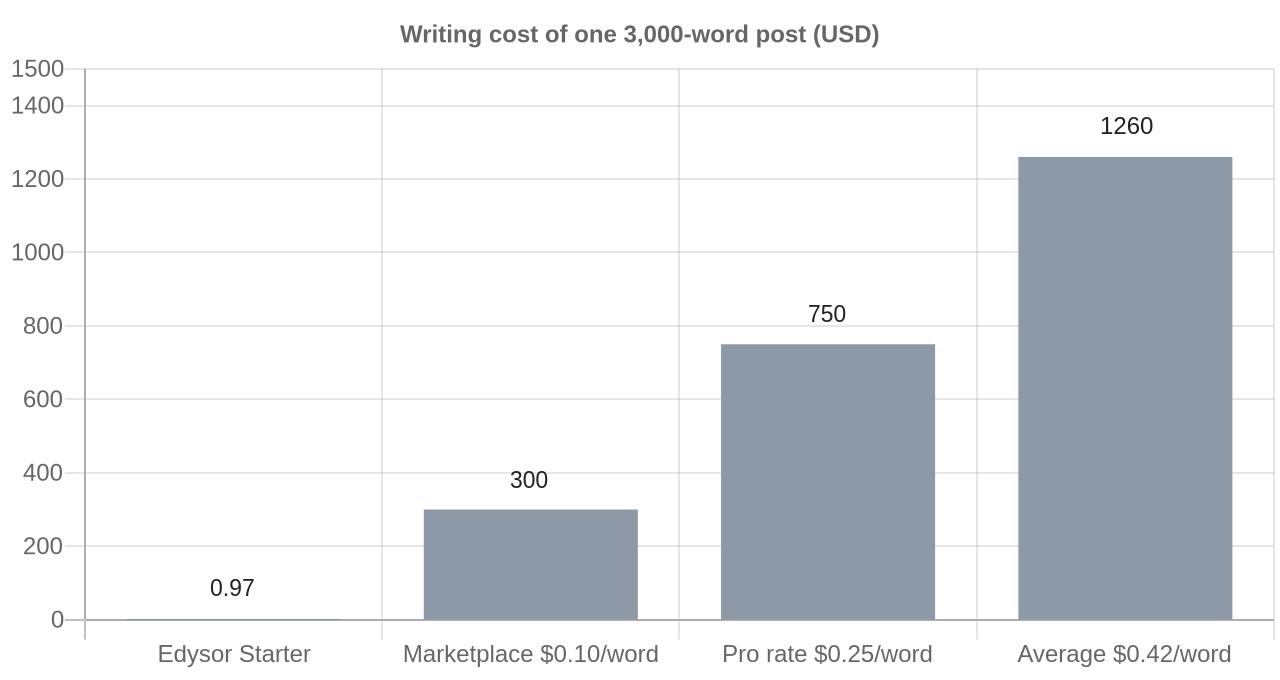
Chart 1: Writing cost of one 3,000-word post. Source: BestWriting 2026 rates and Edysor pricing.
Against a $750 freelance fee, an AI post with review saves about $723, or 96 percent. Over a month the gap widens. Eight posts cost about $241 with Edysor Starter and review, against $6,000 to $10,080 in freelance fees.
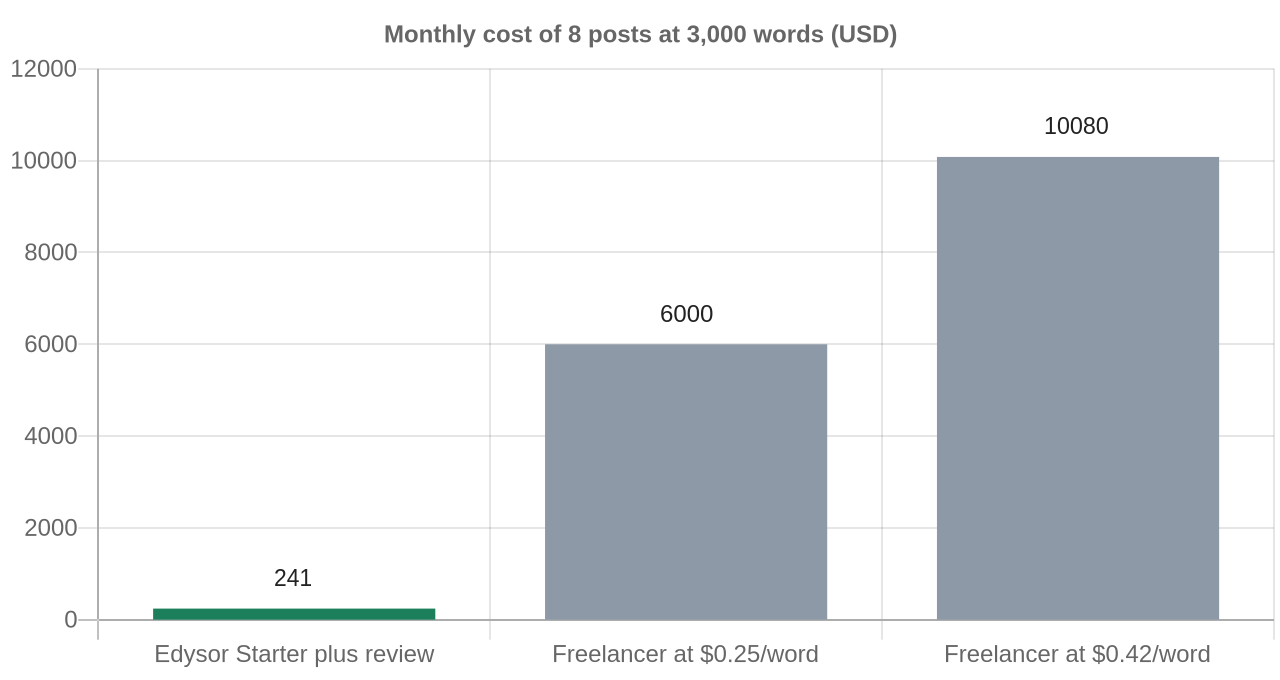
Chart 2: Monthly cost of eight 3,000-word posts. Freelancer figures are fees only.
Volume changes the picture. A small business publishing four posts a month spends about $29 on Starter plus roughly $106 in review time, near $135 in total. The same four posts from a freelancer at $0.25 per word cost $3,000. At two posts a month the gap is still large, though a single freelance post may suit a team with no review capacity.
See One Credit in Action
Edysor writes, illustrates and checks each post, then holds it for your review.
What Are the Hidden Costs of Each Option?
| Cost area | AI blog writer | Freelance writer |
|---|---|---|
| Setup | Profile and plugin setup | Briefing and onboarding |
| Revisions | Regenerated sections use credits | Extra rounds may cost extra |
| Review | Fact-checking and voice edits | Lighter, but still needed |
| Speed | Usually one to three minutes | Days to weeks |
| Management | Little | Invoices, deadlines, replacements |
| Expertise | Needs a human expert for new facts | Can bring first-hand knowledge |
None of these costs makes either option wrong. They change which one is cheaper for a given post. A routine comparison post carries little hidden freelance risk, while a technical guide with no reviewer can cost more in corrections than in fees.
Agencies feel these costs most. Our guide on how to manage 10+ client blogs shows how one profile per client keeps voices apart.
Is AI-Generated Content Good for SEO?
It can be, when quality is high. Quality, not the tool, decides performance, and that applies to freelancers too. Google’s guidance on generative AI content says AI is useful for research and structure, but publishing many pages without adding value may break its spam policy. Its October 2026 update also stresses manual fact-checking before publishing.
That makes human review the real SEO cost. Read what Google rewards in AI content and E-E-A-T. In regulated fields, read AI content compliance before you scale. Search engines and answer engines reward the same things in either case: a direct answer, specific facts, named sources and a clear author. Add a byline, cite your numbers and update dated pricing, and AI-assisted posts can meet the standard freelance posts do.
Quality, Speed and Consistency Compared
Speed. An Edysor post usually takes one to three minutes to generate, so a month of content can be queued in an afternoon. Freelance work moves through briefing, drafting and revision, which often means days or weeks.
Consistency. A freelancer’s tone can drift when workload spikes or staff change. An AI writer loads the same industry profile every time, so vocabulary, banned claims and disclaimers stay fixed.
Depth. A skilled freelancer can interview a customer, test a product or describe a real case. SI cannot, so those posts need a human to supply the experience Google’s guidelines value.
How to Add E-E-A-T to AI-Written Posts
A freelancer brings a name and a track record. An AI draft needs those added on purpose. Before you publish, give every post:
- A real author and reviewer, with credentials that fit the topic.
- First-hand details, such as your own pricing data, screenshots or customer examples.
- Named sources for every statistic, linked to the original page.
- A visible updated date, plus a note on how the post was produced.
Google suggests telling readers how automation was used, so a short disclosure also supports trust.
Should You Choose an AI Writer or a Freelancer?
| Situation | Better fit |
|---|---|
| Weekly long-form SEO posts | AI blog writer |
| Expert interviews or original research | Freelance writer |
| Many client blogs on tight budgets | AI blog writer |
| Personal thought leadership | Freelance writer |
| Regulated topics at volume | AI with expert review |
Can AI Replace Freelance Blog Writers?
For repeatable explainers, comparisons and guides, largely yes. For reporting, opinion and lived experience, no. Most teams do best with a hybrid, which spends freelance budget only where it changes the result.
A Hybrid Workflow in Four Steps
- Choose topics by keyword and search intent, and mark which ones need first-hand input.
- Let SI draft the standard posts and hold them for review.
- Give expert-led posts to a freelancer with a clear brief and deadline.
- Review every post for accuracy, links, title, meta description and image alt text before publishing.
- Track cost per published post each month, including review hours, and move work between the two channels as the numbers change.
What to Look for in AI Writing Tools for Small Businesses
- A clear price per finished post, not only a monthly fee.
- Model and image costs included, with no separate API bill.
- Compliance checks for claims your industry cannot make.
- Drafts held for review, with auto-publish off by default.
- SEO fields written into your plugin, such as Yoast.
Common Mistakes When Comparing the Two
- Comparing a monthly subscription with a per-post fee without dividing by volume.
- Ignoring review time because the software does not bill for it.
- Treating every post as equal, when interviews and original data need a human.
- Skipping fact-checks on AI drafts, including titles, meta descriptions and alt text.
- Using stale prices. Rates and plans change, so recheck quotes each quarter.
Conclusion
The real cost per published post is about $27 with AI plus review, against $750 or more from a freelancer. Price is only one input, so match the tool to the job: AI for repeatable long-form volume, freelancers for expertise and original reporting, and a hybrid when you need both. Start by measuring your own cost per published post for one month, then decide where each dollar earns the most. Revisit the numbers each quarter, because rates and plans change. Use the tables above as a budgeting template.
Ready to Cut Your Cost per Post?
Get early access to Edysor and let SI write in your industry’s voice.
Frequently Asked Questions
How much does an AI blog writer cost?
Edysor plans run from $29 to $199 monthly, which works out to $0.66 to $0.97 per post. Other tools charge by word or ask you to supply paid API keys, so divide any monthly price by the posts you expect to publish.
Is AI writing cheaper than hiring a freelance writer?
Yes, by a very wide margin for standard long-form posts. Even with 30 minutes of paid review, an AI post costs about $27 against $750 or more. The gap narrows only for posts that need original reporting or specialist knowledge.
What is the average cost of a freelance blog post?
The 2026 BestWriting survey found $0.42 per word on average. Peak Freelance respondents most often charged $250 to $399 for 1,500 words.
What is the real cost per published blog post?
Add writing, review, revisions and tools. With Edysor and 30 minutes of review, the total is about $27. Freelance fees start near $750 for 3,000 words, before your own briefing and editing time.
Can AI replace freelance blog writers?
It can replace routine drafting. It cannot replace interviews, original research or first-hand experience, so many teams keep freelancers for those tasks and use AI for routine posts.
Is AI-generated content good for SEO?
It can perform well when it is accurate, original and reviewed. Google judges quality, not the tool, but unreviewed content at scale risks spam policy problems.
What are the hidden costs of AI blog writing?
Watch for separate API bills, image limits, regenerated sections and editing time. Tools that bundle generation, images and compliance checks reduce surprises.
How much can businesses save by using AI for blog writing?
On eight 3,000-word posts a month, savings are roughly $5,800 to $9,800 against freelance fees, after counting Edysor and review time.